
What Is an Open Patella?
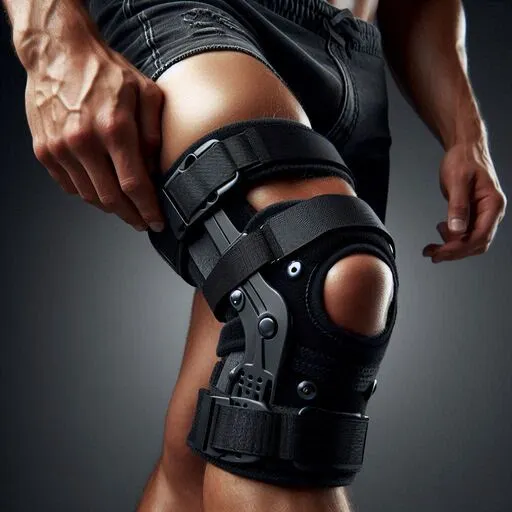
The open patella, or “open knee cap,” is a common term that refers to the design of certain knee braces. These braces have a circular opening around the patella (kneecap) area, offering support while allowing for freedom of movement.
Unlike closed patella braces that cover the kneecap entirely, open patella braces relieve direct pressure on the patella, often recommended for people experiencing knee pain, patellar instability, or conditions like patellar tracking disorder.
Knee pain is one of the most common musculoskeletal complaints in the world, affecting people of all ages —from young athletes recovering from ligament injuries to older adults managing the daily discomfort of osteoarthritis.
Among the many orthopaedic devices designed to address knee conditions, the open patella knee support stands out as one of the most clinically versatile, widely prescribed, and patient-friendly options available.
Yet despite its prevalence in hospitals, physiotherapy clinics, and pharmacies, many people are unsure exactly what an open patella design is, what makes it different from other knee braces, and whether it is the right choice for their specific condition.
This comprehensive guide answers every question you might have about open patella knee supports —covering anatomy, mechanics, clinical indications, materials, sizing,and real-world use.
By the end, you will have a thorough understanding of this product and be equipped to make an informed decision about whether it belongs in your recovery plan.
Understanding the Anatomy of the Knee
Before understanding why the open patella design matters, it helps to understand the anatomy of the knee joint itself.
The knee is the largest and most complex joint in the human body.
It connects the femur (thigh bone) to the tibia (shin bone) and incorporates the patella —the kneecap —as a sesamoid bone embedded within the quadriceps tendon at the front of the joint.
The patella serves a crucial mechanical purpose: it acts as a pulley for the quadriceps muscle group, increasing the lever arm of the quadriceps tendon and magnifying the force that the muscles can exert across the knee.
When you straighten your knee, the patella glides upward within a bony groove on the front of the femur called the trochlear groove.
This gliding motion is called patellar tracking, and when it is disrupted, due to muscle imbalance, structural abnormalities, or trauma —it produces a category of conditions collectively called patellofemoral disorders, which cause anterior knee pain that is directly exacerbated by direct pressure on the kneecap.
The soft tissue structures surrounding the knee include the medial and lateral collateral ligaments (MCL and LCL), the anterior and posterior cruciate ligaments (ACL and PCL) inside the joint, the medial and lateral menisci acting as cartilaginous shock absorbers, and the joint capsule.
All of these structures can be injured or diseased, and a significant proportion of people with knee conditions have pathology that involves or aggravates the patella, making patellar protection a priority in any support device design.
What Does ‘Open Patella’ Mean?
An open patella knee support is a knee brace or sleeve that features a defined oval or circular cutout—an aperture—positioned directly over the kneecap.
This opening allows the patella to sit freely within the aperture rather than being compressed by the brace material.
The rest of the brace wraps firmly around the joint, providing graduated circumferential compression to the muscles, tendons, ligaments, and joint capsule surrounding the knee.
The genius of the open patella design lies in this separation of functions: the brace stabilises and compresses the periarticular structures while simultaneously eliminating direct pressure on the most pain-sensitive structure —the kneecap itself.
Around the aperture, most quality open patella braces incorporate a silicone or foam ring that gently cushions the patella’s perimeter and provides a mild proprioceptive stimulus that can help guide the kneecap into a more central tracking position.
If you want to understand how this compares with a closed-patella sleeve, our detailed guide Open Patella vs Closed Patella Knee Brace—Which Is Right for You? breaks down every difference in design, clinical indication, and patient experience.
How Does an Open Patella Knee Brace Work?
Compression and Oedema Control
The circumferential compression provided by the brace material acts on the soft tissues around the knee in several clinically significant ways.
First, it supports venous and lymphatic drainage from the joint, reducing the accumulation of inflammatory fluid—oedema—that is responsible for much of the swelling, warmth, and pain experienced after injury or during arthritic flares.
Reduced swelling in turn improves the range of motion available at the joint and decreases the sensation of stiffness and tightness that many patients report as their primary functional complaint.
Proprioception Enhancement
Proprioception refers to the body’s ability to sense the position and movement of its joints through specialised receptors in the joint capsule, ligaments, and skin.
After injury or in the presence of chronic conditions, proprioceptive signalling from the knee is often significantly impaired, leading to reduced joint position sense and an increased risk of re-injury.
The compression and tactilestimulation provided by the brace material against the skin activates mechanoreceptors in the dermis and periarticular tissues, effectively ‘waking up’ the proprioceptive feedback loop and improving the patient’s neuromuscular control of the knee.
Patellar Tracking Guidance
The silicone ring or foam pad surrounding the patellar aperture in most open patella designs provides a gentle lateral-to-medial force on the patella during dynamic movement.
In conditions such as patellofemoral pain syndrome (PFPS) and patellar subluxation, the patella tends to track too far laterally due to tightness of the lateral retinaculum and relative weakness of the medial quadriceps (VMO).
The patellar ring subtly counteracts this lateral bias, encouraging more central tracking without rigidly immobilising the patella.
Pain Reduction via Gate Control
The physical pressure and warmth generated by the brace material also stimulate non-nociceptive nerve fibres (A-beta fibres) in the skin and joint capsule, which compete with pain signals (transmitted by C-fibres and A-delta fibres) at the level of the spinal cord’s dorsal horn—a phenomenon described by the gate-control theory of pain.
This is why simply wearing a compression brace can produce meaningful pain relief even before any structural healing has occurred.
Who Needs an Open Patella Knee Support?
The open patella design is appropriate for a wide range of patients and conditions.
Below are the primary groups who benefit most.
Patients with Patellofemoral Pain Syndrome (Runner’s Knee)
Patellofemoral pain syndrome (PFPS) is the most common cause of anterior knee pain, particularly in runners, cyclists, and young active individuals.
The condition involves abnormal stress between the posterior surface of the patella and the femoral trochlea, producing a characteristically diffuse ache around and behind the kneecap that worsens with activities such as stair climbing, squatting, and prolonged sitting.
Patellofemoral Pain Syndrome & Open Patella Support: The Runner’s Complete Guide covers this condition in exhaustive detail, including the evidence base for bracing as a conservative management tool.
Osteoarthritis Patients
Knee osteoarthritis (OA) is the leading cause of disability in older adults, characterised by progressive degradation of articular cartilage, subchondral bone remodelling, and persistent joint inflammation.
The patellofemoral compartment is involved in approximately 75% of knee OA cases.
For OA patients, the open patella design is ideal because it delivers the compression and warmth needed to reduce OA-related synovial inflammation without loading the already sensitised and arthritic kneecap.
For a detailed look at the research, read our article Open Patella Knee Brace for Osteoarthritis —What the Evidence Says.
Post-Surgical Patients
After knee surgery—whether ACL reconstruction, meniscal repair, or total knee replacement —the periarticular soft tissues are acutely inflamed, and the quadriceps muscle is significantly weakened due to arthrogenic inhibition.
An open patella brace in the early rehabilitation phase provides the compression needed to manage post-operative swelling, the proprioceptive stimulus needed to re-train neuromuscular control, and the patellar decompression needed to allow comfortable early weight-bearing and physiotherapy.
See our full post-surgical guide: Open Patella Knee Support After Surgery: ACL, Meniscus & Knee Replacement Recovery.
Athletes
Athletes across a wide spectrum of sports —from recreational runners and gym-goers to elite footballers, basketball players, and cyclists —use open patella knee braces both prophylactically, to reduce injury risk, and therapeutically, to continue training while managing a sub-acute knee condition.
Our dedicated article Open Patella Knee Brace for Athletes:Sport-Specific Performance & Injury Prevention explores how different sports create specific patellar stress patterns and how to select and use the correct brace for each context.
Elderly and Sedentary Individuals
Age-related decline in muscle strength, proprioception, and ligament elasticity makes the elderly population particularly vulnerable to knee instability, falls, and degenerative joint disease.
For elderly individuals who are not candidates for surgery or who choose conservative management, the open patella brace offers a non-pharmacological, accessible means of reducing daily knee pain and improving mobility and confidence during ambulation.
Types of Open Patella Knee Supports
Sleeve-Type Open Patella Brace
The sleeve-type brace is a pull-on, slip-resistant tubular garment made from elastic knit fabric or neoprene, with the patellar aperture knitted or cut into the anterior surface.
This is the most common and simplest form of open patella support, providing moderate compression and good proprioceptive feedback.
It is most suitable for mild to moderate conditions such as early PFPS, mild OA, and post-activity knee aching.
Hinged Open Patella Brace
The hinged brace incorporates lateral and/or medial polycentric (dual-axis) hinges alongside the open patella aperture, providing a higher level of mediolateral stability for patients with ligament laxity, post-ligament reconstruction, or significant knee instability.
The hinges allow full flexion and extension while preventing the valgus and varus stress that would aggravate injured collateral ligaments.
Wraparound Open Patella Brace
The wraparound brace is opened flat and closed around the leg using hook-and-loop Velcro straps, making it significantly easier to apply for patients with limited hand strength, obesity, or significant knee swelling.
It allows more precise compression adjustment and is often preferred for clinical settings where the brace is applied and adjusted by a clinician.
Key Materials Used in Open Patella Braces
The material of a knee brace determines its compression level, durability, breathability, skin tolerance, and overall comfort.
Our detailed guide How to Choose the Right Open Patella Knee Brace: Size, Fit & Material Guide provides a comprehensive breakdown of each material, but a summary is provided here.
Neoprene is a synthetic rubber that provides firm, consistent compression and excellent heat retention —warmth is therapeutically beneficial for chronic conditions like OA, as it improves blood flow and tissue extensibility.
However, neoprene has low breathability and may cause sweating and skin irritation during prolonged wear.
Knitted elastic fabrics (polyester-spandex blends) are more breathable and lightweight, making them preferable for all-day wear and athletic use.
Neoprene-cotton blends offer a middle ground.
Silicone is used specifically for the patellar ring, providing the non-slip, pressure-distributing, and patellar-guiding properties discussed above.
Benefits of Open Patella
The clinical and functional benefits of open patella knee supports are numerous and well-documented.
For a deep dive into each one, read our dedicated article 7 Proven Benefits of Wearing an Open Patella Knee Brace, which covers the evidence behind each benefit with clinical references.
In summary, the device provides targeted pain relief, reduces patellar pressure, controls swelling, enhances proprioception, supports patellar tracking, enables continued activity, and provides psychological confidence during recovery.
How to Choose the Right Open Patella Brace
Selecting the correct open patella brace requires considering your specific diagnosis, activity level, body measurements, and material preferences.
A poor fit can reduce the therapeutic benefit or even cause new problems.
Our complete sizing and selection guide —How to Choose the Right Open Patella Knee Brace: Size, Fit & Material Guide—walks you through every decision point in detail.
How to Wear Open Patella Correctly
Even the best open patella brace will fail to deliver its intended benefits if it is applied incorrectly.
Common errors include placing the patellar aperture too high or too low, applying insufficient or excessive compression, and wearing the brace over clothing.
Our step-by-step guide How to Wear an Open Patella Knee Brace Correctly: Step-by-Step Fitting Guide eliminates these mistakes with clear, illustrated instructions.
Pairing the Brace with Exercise
An open patella knee brace is most effective when used as part of a comprehensive rehabilitation programme that includes targeted strengthening exercises.
The brace supports the joint during activity, but it is the muscles—particularly the quadriceps and hip abductors—that provide long-term stability.
Our physiotherapy-informed guide The Best Exercises to Pair With Your Open Patella Knee Brace for Faster Recovery provides a progressive exercise programme designed to complement your brace wear and accelerate your return to full function.
Alixor’s Open Patella Knee Support
Alixor’s Open Patella Knee Support is manufactured to exacting clinical standards from premium elastic-knit fabric with a contoured silicone patellar ring, optional lateral spring stays for enhanced mediolateral stability, and a breathable construction suitable for all-day wear.
Available in sizes XS to XXL based on mid-patella circumference measurement, it is designed to fit anatomically across diverse patient populations.
As a manufacturer, supplier, and exporter of medical and surgical products, Quanterra Enterprise supplies this product to hospitals, physiotherapy clinics, pharmacies, and export markets across Asia, the Middle East, Africa, and Europe.
Want to Buy a High-Quality Open Patella?
Quanterra Enterprise is a leading name in the medical and surgical industry for buying open patellas.
Buy Open Patella today!
Conclusion
The open patella knee support is not simply a ‘knee brace with a hole in it.’
It is a precisely engineered orthopaedic device whose design reflects a sophisticated understanding of knee biomechanics, patellar pathology, and the neurophysiology of pain and proprioception.
Whether you are managing patellofemoral pain syndrome, knee osteoarthritis, post-surgical swelling, or seeking sports injury prevention, an open patella brace—correctly selected, correctly fitted, and used alongside appropriate exercises—can be a transformative part of your treatment plan.
Consultation and Fit
It’s always recommended to consult with a healthcare professional to choose the right type of open patella brace and ensure a proper fit.