
Benefits of Open Patella
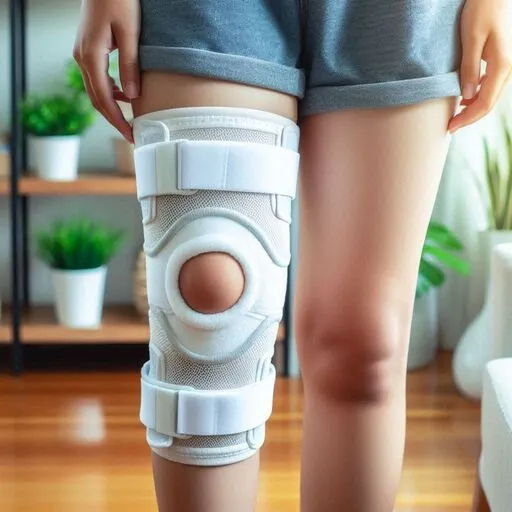
Open patella knee braces are among the most commonly recommended non-surgical interventions for a broad spectrum of knee conditions. But what exactly makes them so effective? In this article, we break down the seven most important, clinically supported benefits of wearing an open patella knee brace — with an explanation of the physiological mechanisms behind each. To understand the product itself before exploring its benefits, visit our comprehensive guide: What Is an Open Patella Knee Support? The Complete Guide.
Benefit 1: Direct Relief of Patellar Pressure and Anterior Knee Pain
The most immediate and impactful benefit of the open patella design is the elimination of direct compressive force on the kneecap. The patellar aperture allows the patella to sit freely within the brace, preventing the loading of the patellofemoral joint that a conventional closed sleeve would create. For patients with patellofemoral pain syndrome, chondromalacia patellae, or patellar bursitis, this decompression can produce dramatic and near-immediate pain relief — often the deciding factor in a patient’s ability to participate in physiotherapy, walk comfortably, or return to sport.
Research in sports medicine consistently shows that patellofemoral joint stress increases dramatically during weight-bearing activities — reaching up to 7.6 times body weight during deep squatting. Any external compression on the kneecap amplifies this stress. By designing the brace to avoid this region entirely, the open patella concept directly addresses the root biomechanical cause of anterior knee pain in patellofemoral disorders.
Benefit 2: Reduction of Joint Swelling and Oedema
The circumferential compression provided by the brace material around the knee joint plays a vital role in controlling both acute post-injury oedema and chronic inflammatory joint effusion. Compression therapy is a well-established principle in wound and oedema management: external pressure counteracts the hydrostatic pressure gradient that drives fluid from the vascular and lymphatic compartments into the interstitial space, reducing the accumulation of oedema fluid in the periarticular soft tissues and joint capsule.
Reduced swelling translates directly to improved range of motion, reduced pain, and faster return to function. Patients who wear their open patella brace consistently in the early days after injury or surgery consistently report faster resolution of swelling compared to those who use the brace only intermittently. For post-surgical patients, the role of compression in managing peri-operative oedema is explored in detail in Open Patella Knee Support After Surgery: ACL, Meniscus & Knee Replacement Recovery.
Benefit 3: Enhanced Proprioception and Neuromuscular Control
One of the least understood but most clinically significant benefits of wearing a knee brace is its effect on proprioception — the neuromuscular system’s ability to sense joint position, movement, and load. The sensory receptors responsible for proprioception (Golgi tendon organs, Ruffini endings, Meissner corpuscles, Pacinian corpuscles) are found in the joint capsule, ligaments, tendons, and skin surrounding the knee. After injury, these receptors are disrupted — both structurally (through tissue damage) and functionally (through reflexive inhibition and swelling-induced mechanoreceptor desensitisation).
The compression and tactile stimulation of the brace fabric against the skin around the knee activates the superficial mechanoreceptors and sends an enhanced proprioceptive signal to the central nervous system. Multiple randomised controlled trials have demonstrated that knee bracing significantly improves joint position sense, reaction time to perturbation, and dynamic stability compared to no bracing in patients with chronic knee instability and OA. For athletes, this translates to improved agility, balance, and landing mechanics — all of which reduce re-injury risk.
The relationship between proprioception enhancement and exercise rehabilitation is explored in our guide The Best Exercises to Pair With Your Open Patella Knee Brace for Faster Recovery, which includes specific proprioceptive exercises to be performed while wearing the brace.
Benefit 4: Patellar Tracking Correction and Stabilisation
The silicone or foam ring that borders the patellar aperture in quality open patella braces exerts a gentle, consistent centripetal force on the patella’s circumference. In the most common patellar tracking disorder — lateral patellar mal-tracking — this ring provides a medialising influence that partially counteracts the lateral pull of the tight lateral retinaculum and iliotibial band. Over time, combined with targeted strengthening of the VMO (the inner portion of the quadriceps, which is responsible for medialising the patella in the final degrees of knee extension), this corrective force can normalise patellar kinematics and allow symptom-free loading of the joint.
Patellar tracking abnormalities are central to both patellofemoral pain syndrome and patellar subluxation/dislocation — two conditions for which the open patella brace is considered first-line conservative management. The full clinical picture of patellar tracking disorders and the role of bracing is covered comprehensively in Patellofemoral Pain Syndrome & Open Patella Support: The Runner’s Complete Guide.
Benefit 5: Warmth and Improved Tissue Extensibility
Knee braces — particularly those made from neoprene or neoprene-blend materials — retain the metabolic heat generated by the joint and surrounding musculature. This local thermal effect increases blood flow to the periarticular tissues, improves the extensibility of collagen-rich structures such as the joint capsule, patellar tendon, and ligaments, and reduces the viscous resistance of the synovial fluid within the joint cavity. For patients with chronic conditions such as OA or tendinopathy, this warmth effect can meaningfully reduce morning stiffness and improve the range of motion available for daily activities and physiotherapy exercises.
The therapeutic value of warmth is particularly pronounced in osteoarthritis patients, where synovial inflammation and cartilage stiffening are ongoing features. The evidence for heat therapy as a complement to bracing in OA management is reviewed in Open Patella Knee Brace for Osteoarthritis — What the Evidence Says.
Benefit 6: Support for Return to Sport and Physical Activity
A key clinical goal in rehabilitation is the safe, progressive return to physical activity following a knee injury or surgery. An open patella brace supports this goal in several complementary ways: it reduces pain during activity (allowing the patient to engage in therapeutic exercise at a higher intensity), provides protective stability during the period when joint structures are still healing, and gives the patient psychological confidence — a factor that has been shown in sports psychology research to be a genuine determinant of successful return-to-sport outcomes.
Athletes using the brace during return to sport phases of rehabilitation are guided on how to integrate the brace into training in our article Open Patella Knee Brace for Athletes: Sport-Specific Performance & Injury Prevention, which covers progressive loading strategies, sport-specific movement patterns, and when to wean off brace dependence.
Benefit 7: Prevention of Secondary Injury and Overuse Damage
When the knee is painful, patients unconsciously adopt compensatory movement patterns — altered gait mechanics, increased reliance on the contralateral limb, avoidance of knee flexion — that protect the painful joint in the short term but create secondary injury risks in the medium term. Altered gait increases load on the hip, lumbar spine, and ankle on the affected side and increases the risk of developing hamstring strains, IT band syndrome, and hip bursitis as compensatory structures are overloaded. By reducing knee pain and improving joint confidence, the open patella brace helps patients maintain more normal movement patterns, reducing these downstream injury risks.
Getting the Most from These Benefits
To realise all seven of these benefits fully, the brace must be correctly selected for your condition and body dimensions — see How to Choose the Right Open Patella Knee Brace: Size, Fit & Material Guide — and correctly applied — see How to Wear an Open Patella Knee Brace Correctly: Step-by-Step Fitting Guide. Benefits are further amplified when the brace is used in conjunction with a structured exercise programme; see The Best Exercises to Pair With Your Open Patella Knee Brace for Faster Recovery for a physiotherapy-informed programme you can start immediately.
Conclusion
An open patella knee brace is far more than a passive support garment. It is a multi-mechanism therapeutic device that simultaneously addresses pain, swelling, neuromuscular control, patellar mechanics, tissue extensibility, functional capacity, and injury prevention. Used correctly, it represents one of the most cost-effective and evidence-supported conservative interventions available for knee conditions involving the patella.